
Inflammation, Immune Activation, and Airway Physiology
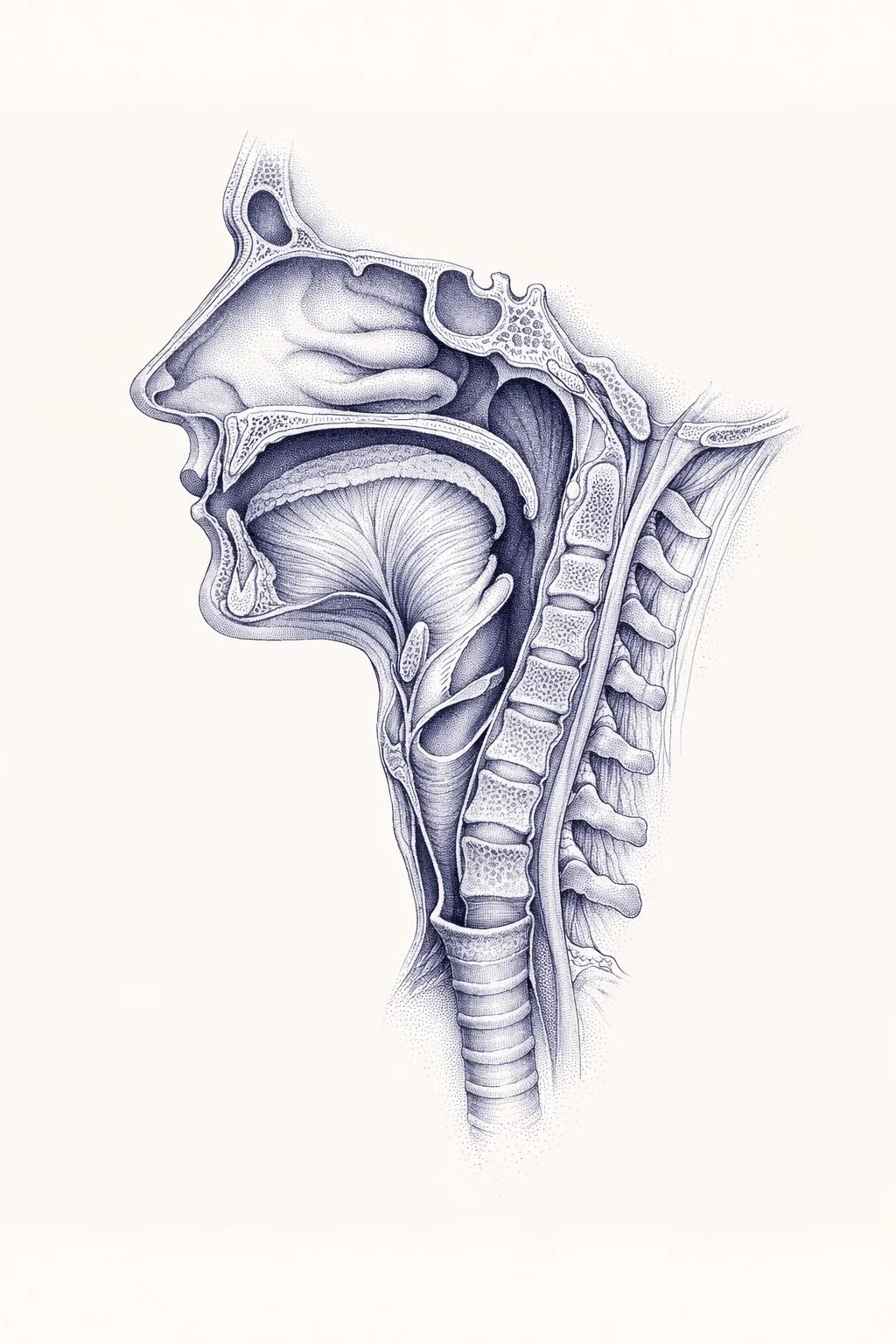
Intermittent hypoxia can drive oxidative stress and systemic inflammation—linking airway dysfunction to broader chronic disease pathways.
-
Systemic Inflammation and Oxidative Stress in Obstructive Sleep Apnea.
Ryan S, Taylor CT, McNicholas WT.
Demonstrates that intermittent hypoxia in OSA drives systemic inflammation and oxidative stress independent of obesity.
[Journal of Clinical Sleep Medicine (2009)]
-
Inflammation in Atherosclerosis: From Pathophysiology to Practice.
Libby P, Ridker PM, Hansson GK.
Foundational review linking chronic inflammation to vascular disease, relevant to hypoxia-driven inflammatory pathways in sleep-disordered breathing.
[Journal of the American College of Cardiology (2009)]
-
Oxidative Stress, Inflammation, and Endothelial Dysfunction in Obstructive Sleep Apnea.
Lavie L.
Explains how repetitive hypoxia–reoxygenation cycles activate inflammatory cascades and endothelial injury.
[Frontiers in Bioscience (2012)]
-
Elevated C-Reactive Protein in Patients With Obstructive Sleep Apnea.
Shamsuzzaman ASM, Winnicki M, Lanfranchi P, et al.
Demonstrates elevated CRP levels in OSA, linking airway obstruction to systemic inflammatory burden.
[Circulation (2002)]
-
Soluble Interleukin-6 Receptor and Risk of Sleep-Disordered Breathing.
Mehra R, Storfer-Isser A, Kirchner HL, et al.
Shows inflammatory cytokine signaling abnormalities associated with sleep-disordered breathing severity.
[American Journal of Respiratory and Critical Care Medicine (2006)]
-
Increased Carotid Intima-Media Thickness and Serum Inflammatory Markers in Obstructive Sleep Apnea.
Minoguchi K, Yokoe T, Tazaki T, et al.
Links inflammatory markers with vascular injury in OSA patients.
[American Journal of Respiratory and Critical Care Medicine (2005)]
-
Obesity, Inflammation, and Obstructive Sleep Apnea in Children.
Kheirandish-Gozal L, Gozal D.
Demonstrates inflammatory activation in pediatric OSA independent of obesity alone.
[Journal of Applied Physiology (2008)]
-
Intermittent Hypoxia Induces Inflammation and Immune Dysregulation.
Almendros I, Wang Y, Becker L, et al.
Animal and translational evidence showing hypoxia-driven immune activation relevant to human OSA.
[American Journal of Respiratory Cell and Molecular Biology (2014)]
-
Sleep Apnea as an Independent Risk Factor for Cardiovascular Disease: Current Evidence.
McNicholas WT, Bonsigore MR.
Positions inflammation as a key mechanistic bridge between airway obstruction and systemic disease.
[European Respiratory Journal (2007)]
-
Sleep and Inflammation: Partners in Sickness and in Health.
Irwin MR.
Reviews bidirectional relationships between sleep disruption, immune activation, and chronic disease.
[Nature Reviews Immunology (2019)]
Link List
Select + copy
Share this research with a colleague, a referring physician, or a patient who wants to go deeper. Copy the links below and send them directly.
https://pubmed.ncbi.nlm.nih.gov/19960643/
https://pubmed.ncbi.nlm.nih.gov/19179219/
https://pubmed.ncbi.nlm.nih.gov/22201838/
https://pubmed.ncbi.nlm.nih.gov/11867873/
https://pubmed.ncbi.nlm.nih.gov/16709936/
https://pubmed.ncbi.nlm.nih.gov/15653970/
https://pubmed.ncbi.nlm.nih.gov/18239071/
https://pubmed.ncbi.nlm.nih.gov/24337494/
https://pubmed.ncbi.nlm.nih.gov/17537765/
https://pubmed.ncbi.nlm.nih.gov/31594935/